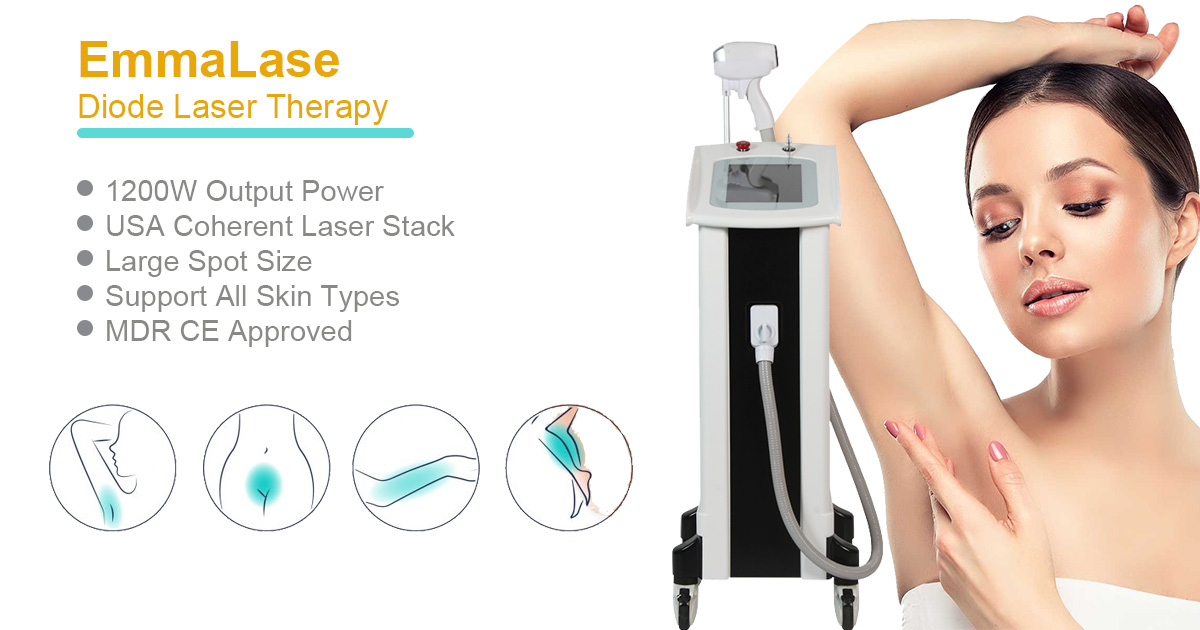
Have you ever contemplated the growing acclaim surrounding diode laser hair removal technology? You are certainly not in the minority. In our collective pursuit of achieving flawlessly smooth, hairless skin, a significant number of individuals are now opting for this cutting-edge approach. A predominant inquiry that frequently arises in this context is: what is the requisite number of sessions for diode laser hair removal to achieve optimal results? Let us delve deeply into this subject, illuminating the sophisticated technology that underpins it and setting expectations for what one might anticipate from their treatment sessions. This process transcends the mere elimination of undesired hair – it represents a progressive journey towards attaining the coveted, silky-smooth skin that many aspire to.
Diode laser hair removal stands as a paragon of high-tech advancements in dermatological care. This sophisticated procedure employs a specific wavelength, approximately 808 nm, to meticulously target melanin within hair follicles of both light and dark skin. When these follicles absorb the laser’s light energy, it is converted into heat, effectively damaging the follicle and impeding future hair growth. This method surpasses conventional techniques like wax or shave, which merely address hair on the surface. In contrast, diode laser treatment delves deeper, targeting the root cause of hair growth, thus offering a revolutionary solution for those seeking an end to the incessant cycle of traditional hair removal methods for effective treatment of all skin and hair types.

Delving into the mechanics of diode laser technology unveils a realm of precision and innovation. These lasers emit a coherent stream of light at a singular wavelength, which is meticulously directed into the hair follicles. Such precision ensures minimal collateral damage to the surrounding epidermal tissue, rendering it an exceptionally safe option for a diverse array of skin types. A particularly remarkable aspect of this technology is its evolutionary nature. Contemporary diode laser systems are equipped with modifiable wavelengths and pulse durations, thus providing unparalleled versatility to accommodate varying hair and skin types. This adaptability transcends the conventional one-size-fits-all approach, offering a tailored, customizable solution in the field of hair removal.
Comparing diode lasers to other types of laser hair removal technologies, like Alexandrite and Nd:YAG lasers, is like comparing apples to oranges. Each has its strengths, but diode lasers have carved out a unique niche. Let’s break it down:
Diode lasers operate at a wavelength of 808 nm, which is effectively absorbed by the melanin in hair follicles. This makes them particularly suitable for a wider range of skin types and hair colors. Now, if we line up diode lasers against Alexandrite lasers (which operate at 755 nm) and Nd:YAG lasers (with a wavelength of 1064 nm), we can see some stark contrasts.
Here’s a handy table to visualize these differences:
| Feature | Diode Laser | Alexandrite Laser | Nd:YAG Laser |
| Wavelength | 808 nm | 755 nm | 1064 nm |
| Suitable Skin Types | I-VI | I-III | I-VI |
| Hair Color Effectiveness | Dark & Medium | Dark & Light | Dark |
| Risk of Skin Discoloration | Lower | Moderate | Low |
| Pain Level | Moderate | High | Moderate |
| Versatility | High | Moderate | High |
In this comparison, we see that diode lasers offer a balance of effectiveness and safety for a broader range of skin types, from very light to very dark (Types I-VI). While Alexandrite lasers are great for lighter skin (Types I-III) and Nd:YAG lasers are also suitable for a wide range (I-VI), the diode’s mid-range wavelength strikes a balance in targeting melanin without as high a risk of affecting the surrounding skin.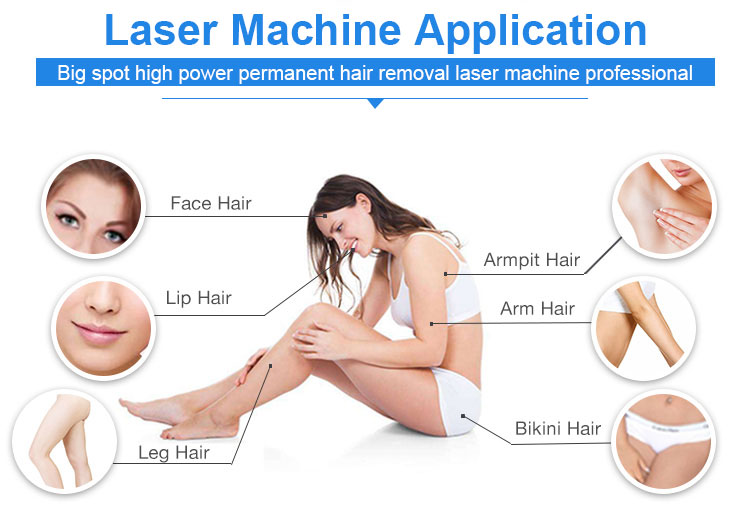
Moreover, diode lasers tend to have a moderate pain level compared to the high discomfort often reported with Alexandrite lasers. The versatility of diode lasers also stands out, making them a preferred choice for various hair colors and skin types, though Alexandrite can be more effective for lighter hair.
Ascertaining the requisite number of sessions for efficacious diode laser hair removal necessitates a nuanced understanding of individual dermatological profiles and taking necessary precautions. This is not a uniform procedure; rather, it is contingent upon a multitude of variables. Primarily, the interplay of one’s skin type and hair pigment plays a pivotal role in determining the number of sessions required. Typically, the juxtaposition of darker hair against a lighter skin canvas offers an optimal response to diode laser treatments, particularly for specific anatomical regions. However, it’s imperative to acknowledge the strides made in laser technology, which now accommodate a broader spectrum of skin and hair pigments for each treatment area.
In the realm of diode laser treatments, the synergy of skin type and pigmentation is of paramount importance. Ideal candidates often possess a lighter skin tone juxtaposed with darker hair, allowing the laser to target the melanin in the hair follicles without impinging upon the skin’s natural pigment. Nonetheless, advancements in laser settings now permit those with light skin tones, as well as those with darker skin tones, to attain comparable results, provided that treatments are conducted with meticulous care and tailored settings. The crux of achieving optimal outcomes lies in the expertise of the laser technician, whose proficiency in adjusting the laser parameters to individual requirements is crucial.
In the sophisticated sphere of dermatological laser therapy, the intrinsic characteristics of an individual’s hair, specifically its texture and chromaticity, play an indispensable role in dictating the intricacies of the laser treatment regimen. Hair that exhibits a robust texture, concomitant with elevated levels of pigmentation, demonstrates a heightened proclivity for laser energy absorption. This intensified absorption rate substantially enhances the hair’s receptivity to laser therapy, consequently elevating its susceptibility to the salutary effects of the treatment. In contrast, individuals whose hair manifests either a diminished pigmentary intensity or a finer texture may require a more protracted series of therapeutic sessions to achieve outcomes comparable to those attained by counterparts with darker and more coarsely textured hair.
A critical element demanding meticulous attention in this context is the hair follicle’s cyclical growth pattern. The potency of laser treatments is significantly more pronounced during the anagen phase, a period typified by vigorous hair growth. This reality accentuates the necessity for multiple, strategically timed treatment interventions. Such scheduling is imperative to ascertain that all hair follicles are efficaciously engaged during this crucial growth juncture. Embracing this methodical and scrupulous strategy is vital in administering a holistic treatment regimen. It ensures that each phase of hair growth is comprehensively addressed, thus securing a consistent and gratifying result in the aggregate treatment trajectory.
In the intricate and highly specialized domain of hair removal, ascertaining the ideal frequency for conducting treatments is crucial and demands meticulous attention. Ordinarily, the interval between consecutive sessions is determined with precision, usually spanning a period of four to six weeks. This carefully chosen timeframe is not arbitrary, but is instead meticulously tailored to align with the unique hair regrowth cycle of each individual, a cycle that varies markedly from person to person.
First and foremost, it provides the epidermis with an ample period for recuperation and healing, crucial for mitigating potential skin irritation or adverse dermatological reactions. This precaution is paramount in maintaining the integrity and health of the skin post-treatment.
Secondly, this interval is harmoniously synchronized with the body’s inherent hair growth cycle. It ensures that each subsequent treatment is precisely timed to coincide with the emergence of new hair follicles in the anagen phase – the most receptive stage for hair removal treatments, particularly laser procedures. This synchronization enhances the efficacy of the treatment in diminishing unwanted hair growth, ensuring maximum effectiveness of the procedure.
Thus, adhering to this strategically determined schedule not only optimizes the outcome of hair removal treatments but also plays a critical role in maintaining the overall health and wellbeing of the skin.
Are you deliberating over the optimal quantity of laser hair removal treatments required for various bodily regions? The answer, inherently variable, hinges significantly on the specific anatomical area under consideration. For instance, diminutive zones characterized by relatively fine hair growth, such as the upper lip or the bikini area, typically necessitate an estimated four to six sessions to attain satisfactory hair reduction. Conversely, larger or more follicularly dense areas, such as the dorsal region (commonly referred to as the back) or the lower extremities (legs), generally require a slightly augmented number of treatments, approximately six to eight sessions, to procure optimal depilation outcomes for distinct body parts. It is paramount to recognize that individual physiological variances exert a substantial impact in this regard. Consequently, the numbers provided should be construed as general approximations rather than unyielding benchmarks. To facilitate a clearer understanding, I have prepared a detailed table for your reference:
| Body Area | Average Number of Sessions |
| Upper Lip | 4-6 |
| Bikini Line | 4-6 |
| Underarms | 5-7 |
| Arms | 6-8 |
| Legs | 6-8 |
| Back | 6-8 |
| Chest | 6-8 |
| Full Face | 5-7 |
In the realm of diode laser hair removal, a universally applicable approach regarding session duration is a misnomer. The temporal extent of each session is subject to variation, contingent not solely on the anatomical region undergoing treatment but also on its dimensional expanse and the sequential positioning of the session within the overall treatment plan. To elucidate further, let us delineate the specifics, thereby providing a clearer expectation framework:
Is diode laser hair removal a ticket to permanent hair freedom? Well, it’s a bit more nuanced than a simple yes or no. Diode laser treatments can lead to a significant reduction in hair growth, offering permanent results for any area of the body. For many, this means an extended period of smooth, hair-free skin with minimal discomfort and low risk of side effects. However, ‘permanent’ might be a bit misleading. Think of it as ‘long-term hair reduction.’ The reality is, some hair may eventually grow back, albeit finer and sparser than before. Factors like hormonal changes can influence this regrowth. That’s why, even after a full treatment course, occasional maintenance sessions may be necessary to keep those pesky hairs at bay. So, while you might not be saying goodbye to hair forever, you’re certainly reducing your time with razors and waxing strips to a minimum.
In the realm of diode laser hair removal, a paramount inquiry often arises: “Is this procedure safe?” Such apprehension is understandable, considering the use of lasers – a concept that might evoke a semblance of science fiction – in targeting the dermis with concentrated light. However, it is imperative to acknowledge that, when conducted by a certified professional, diode laser hair removal is widely regarded as substantially safe.
The United States Food and Drug Administration (FDA), a pivotal regulatory authority, has accorded approval to diode laser hair removal systems for the purpose of permanent hair reduction. This approval is indicative of their conformity with stringent safety protocols. Moreover, a plethora of clinical studies corroborate the safety and efficacy of these systems. Despite this, as with any cosmetic intervention, it is crucial to consider potential risks and side effects.
Predominantly, the side effects observed are relatively benign, encompassing symptoms such as transient erythema (skin redness), mild edema (swelling), and a sensation akin to a minor sunburn. These symptoms are typically ephemeral, abating within a few hours to several days post-treatment.
The rationale behind the necessity for multiple sessions in diode laser hair removal is intrinsically linked to the physiological dynamics of hair growth. Human hair undergoes distinct growth phases: the anagen phase, characterized by active growth; the catagen phase, a transitional period; and the telogen phase, wherein the hair is in a resting state. The efficacy of laser treatments is profoundly maximized during the anagen phase, as the hair follicles are actively producing hair and remain intimately connected to the dermal papilla. It is during this phase that the laser’s energy can effectively obliterate the follicle’s regenerative capabilities.
Nevertheless, a critical aspect to consider is that hair strands across the body do not synchronously progress through these phases. At any given moment, various follicles are at different stages of their growth cycle. Consequently, a solitary treatment session is incapable of targeting all hairs in their susceptible anagen phase. This disparate growth cycle necessitates a series of treatments, traditionally spaced approximately four to six weeks apart. This strategic scheduling ensures that each session incrementally targets new groups of hair as they enter the anagen phase.
Through this methodical and calibrated approach, there is a gradual diminution in the quantity and thickness of hair, culminating in a noticeably smoother, hair-free skin texture. Such a process is not merely about the episodic removal of hair; it represents a meticulously orchestrated series of treatments designed to profoundly disrupt and ultimately curtail the natural cycles of hair growth, thereby facilitating sustained hair reduction over time.
Commencing your journey with diode laser hair removal necessitates meticulous preparatory measures to ensure optimal results. The following are some comprehensive guidelines:
Adhering to these preparatory steps diligently can substantially enhance the efficacy and safety of your diode laser hair removal treatment, leading to a more satisfactory and comfortable experience.
During the session, your technician will use a handheld device that emits the laser. You’ll feel a sensation often described as a rubber band snapping against the skin – a bit uncomfortable, but not unbearable. The device might also blow cool air or have a cooling tip to help soothe your skin.
Proper post-treatment care is crucial:
Remember, following these guidelines closely can significantly enhance the effectiveness and safety of your diode laser hair removal treatment.
More information ,can visit our Emmalaser diode laser theray device


